
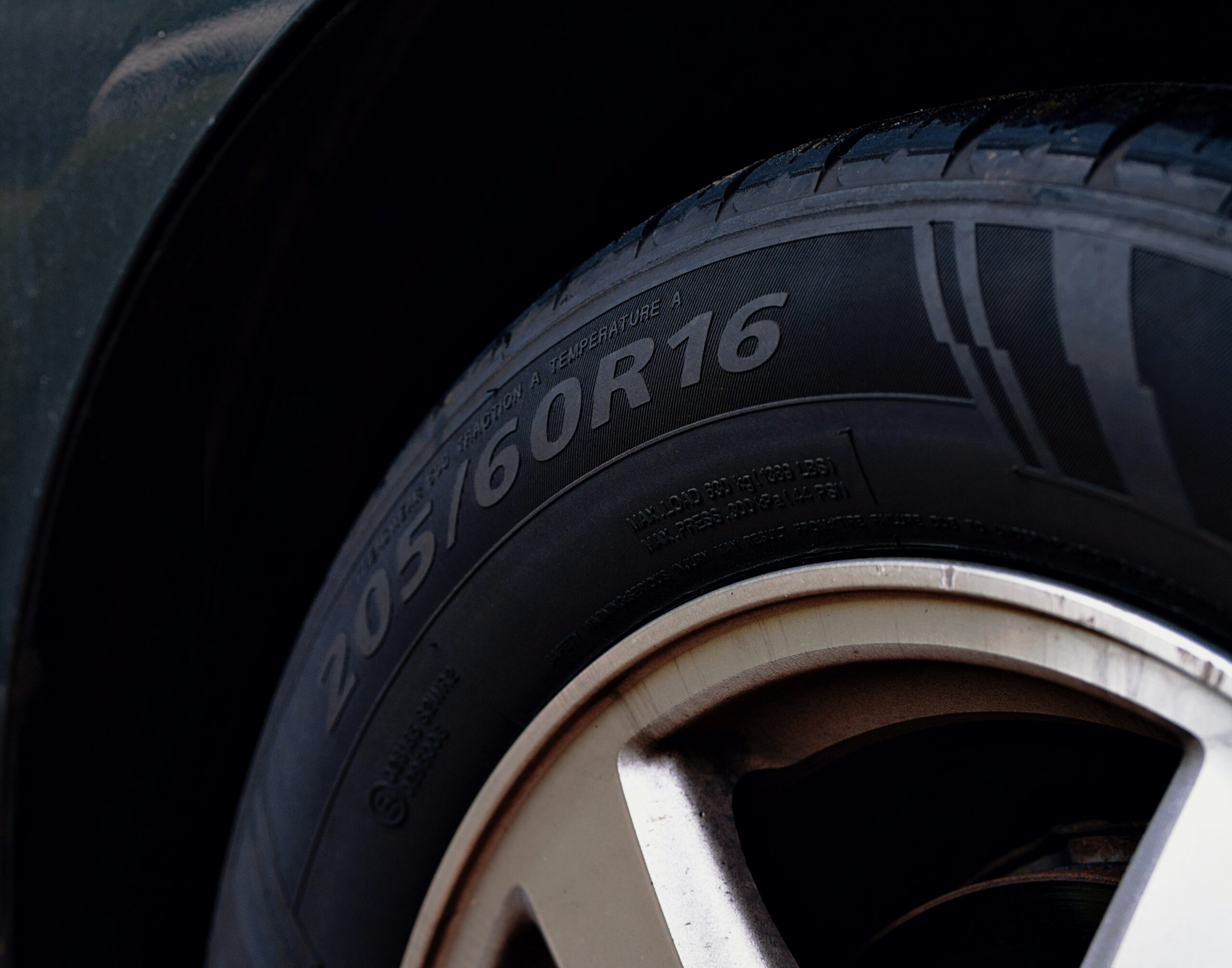
Have you ever looked at the sidewall of your tires and wondered what those confusing numbers and letters mean? You are not alone. While it looks like a secret code, reading your tire size is actually quite simple once you know what to look for.
Understanding these numbers is crucial for safety, fuel economy, and ensuring you buy the correct replacement tires for your vehicle. In this guide, we will break down the sequence (e.g., 205/55 R16) step by step.
The Sequence Explained
Let’s use a common tire size as an example: P205/55 R16 91V. Here is what each section represents:
1. Tire Type (P or LT)
- P (Passenger): Designed for standard cars, SUVs, and minivans.
- LT (Light Truck): Designed for heavy loads, towing, and pickup trucks.
- Note: If there is no letter, it is a Euro-Metric tire, which is standard for most European cars.
2. Width (205)
The first number (e.g., 205) is the width of the tire in millimeters from sidewall to sidewall.
- A higher number means a wider tire, which generally offers better grip but may increase fuel consumption.
- Example: A 205 tire is 205mm wide.
3. Aspect Ratio (55)
The number following the slash (/) is the aspect ratio. It tells you the height of the tire’s sidewall as a percentage of its width.
- 55 means the sidewall height is 55% of the tire’s width.
- Lower numbers (e.g., 40, 35): Found on sports cars (Low profile tires). They offer better handling but a stiffer ride.
- Higher numbers (e.g., 65, 70): Found on trucks and standard sedans. They absorb bumps better for a comfortable ride.
4. Construction (R)
This refers to the internal construction of the tire. Over 98% of tires sold today are Radial tires.
5. Wheel Diameter (16)
This number indicates the size of the wheel (rim) that the tire fits, measured in inches.
- If your tire says 16, you can only mount it on a 16-inch rim. You cannot squeeze it onto a 17-inch rim.